
Introduction:
When discussing disability rights and social inclusion, the terms accessibility audit and inclusion audit often surface. Both are crucial in ensuring that environments—be it physical spaces, digital platforms, or social systems—are equitable and accessible for all individuals. However, there is a significant distinction between the two: accessibility audits focus primarily on identifying and addressing physical or digital barriers to access, while inclusion audits take a broader, more holistic approach by analyzing how people with disabilities are integrated into society.
Why should we focus on an Inclusion Audit?
- Beyond the Physical:
An accessibility audit primarily addresses physical barriers like ramps, door widths, accessible bathrooms, and digital barriers such as screen reader compatibility or alternative text. While important, these audits often miss the bigger picture: how people with disabilities are treated socially, psychologically, and culturally. Inclusion is about the experience of belonging, not just the removal of physical barriers. An inclusion audit evaluates how environments, policies, and attitudes facilitate or hinder full participation of people with disabilities in all areas of life—employment, education, healthcare, social activities, etc. - The Psychological and Social Dimensions:
Accessing a space or a website is just one part of the equation; being included in social activities, respected in professional settings, and treated as an equal participant in society is just as crucial. An inclusion audit identifies implicit biases, prejudices, and social barriers that perpetuate ableism, even in spaces that may seem physically accessible. Without examining attitudes, behaviors, and societal attitudes toward disability, we might have physical access without true inclusion. - A Shift in Mindset:
Focusing only on accessibility audits can create a checkbox mentality. It’s easy to assume that if a building is wheelchair-accessible or a website meets WCAG standards, then it’s “inclusive.” But inclusion goes far beyond these technicalities; it involves the creation of a culture of acceptance, participation, and equality. An inclusion audit shifts the focus from merely meeting standards to fostering environments that promote dignity and equal opportunity.
How Can We Conduct an Inclusion Audit?
- Data Collection and Stakeholder Involvement:
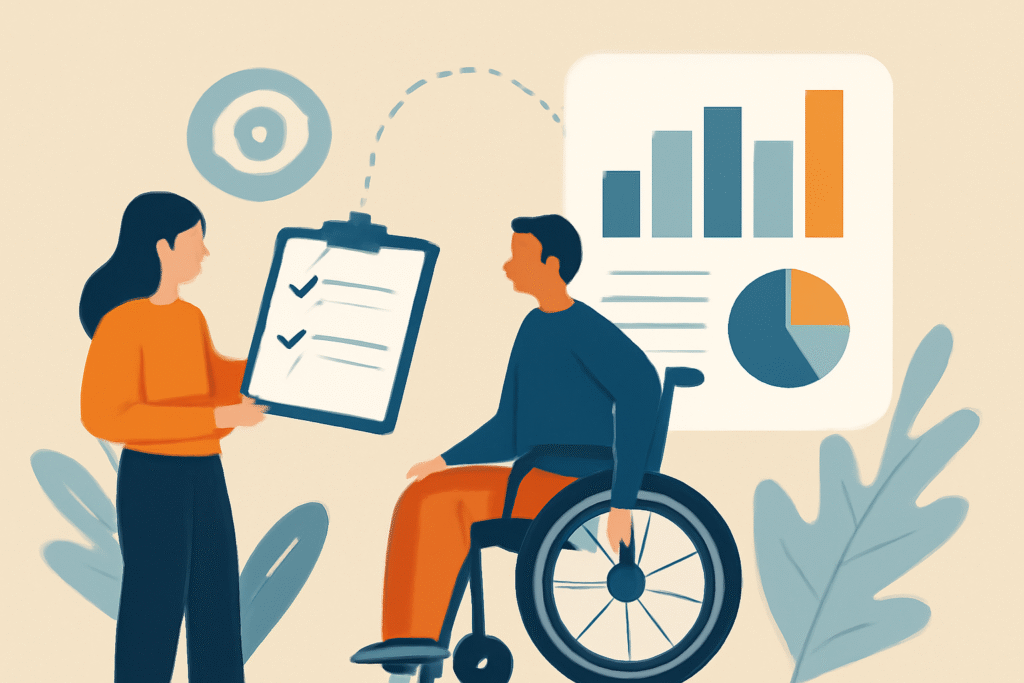
Conducting an inclusion audit requires gathering data through surveys, interviews, and focus groups that involve people with disabilities, employees, service users, and other relevant stakeholders. This will provide valuable insights into the lived experiences of people with disabilities. The audit should examine:- Social and Cultural Barriers: Are people with disabilities included in social activities, work groups, and decision-making processes? Are their voices heard in key conversations?
- Representation and Visibility: Do media, events, and advertisements reflect the diversity of disability experiences? Are people with disabilities portrayed with respect and complexity rather than as “inspirational” or “pitiful” figures?
- Organizational Policies: Does the organization have clear anti-ableism policies? Are these policies actively implemented and communicated?
- Accessibility Audit as a Component:
While an inclusion audit goes beyond the physical or digital barriers, the accessibility audit must be a part of the broader inclusion audit. Physical accessibility is foundational to inclusion. If people cannot physically access spaces or information, they will be excluded, regardless of how inclusive the attitudes or policies are. Thus, an accessibility audit should be incorporated into the larger inclusion audit, but it should not be the only focus. - Evaluating Organizational Culture:
In addition to physical and digital audits, examining organizational culture is crucial. For instance, is the workforce diverse in terms of disability representation? Does the company provide reasonable accommodations for employees with disabilities? Are leaders in the organization trained to recognize and address ableism, microaggressions, and other barriers to inclusion? - Legal and Ethical Frameworks:
The audit should also evaluate whether the organization complies with legal frameworks such as the Americans with Disabilities Act (ADA), the Equality Act (UK), or the Rights of Persons with Disabilities Act (India), but also look beyond mere compliance to assess whether the spirit of these laws is truly being enacted.
Where Should We Conduct an Inclusion Audit?
- Physical Spaces:
While offices, workplaces, and public spaces (like parks, transportation systems, and theaters) are obvious places to audit for accessibility, they must also be examined for inclusion. Does the environment allow for meaningful engagement of people with disabilities? Is there a culture of inclusion, or are people with disabilities relegated to the margins? - Digital Platforms:
Websites, apps, and digital content must be accessible in terms of usability, but they also need to foster an inclusive experience. This includes examining how people with disabilities are represented in online content, whether the language used is respectful, and whether people with disabilities are provided with a platform to express their experiences and needs. - Workplaces and Educational Institutions:
Are people with disabilities recruited, retained, and promoted within organizations? In educational settings, are students with disabilities fully integrated into academic, social, and extracurricular activities? Is the curriculum inclusive, or does it perpetuate harmful stereotypes about disability? - Healthcare and Public Services:
An inclusion audit should extend into areas like healthcare systems and public services to assess whether people with disabilities have access to appropriate services and are treated equitably. It should also examine whether public health campaigns, government policies, and services are designed with the needs of people with disabilities in mind.
Conclusion: Why Prioritize Inclusion Audits?
Inclusion audits are crucial because they move us from mere accessibility to true inclusion. They require us to critically examine not just the physical barriers to access but also the social, psychological, and cultural forces that perpetuate ableism. While accessibility audits remain an essential part of this process, focusing solely on them risks reducing the concept of disability inclusion to a checklist of requirements, rather than a shift toward true equality.
By integrating accessibility audits into a broader inclusion framework, organizations and societies can take a comprehensive approach to dismantling ableism and creating environments where people with disabilities are fully integrated, respected, and included in all aspects of life.