

Summary
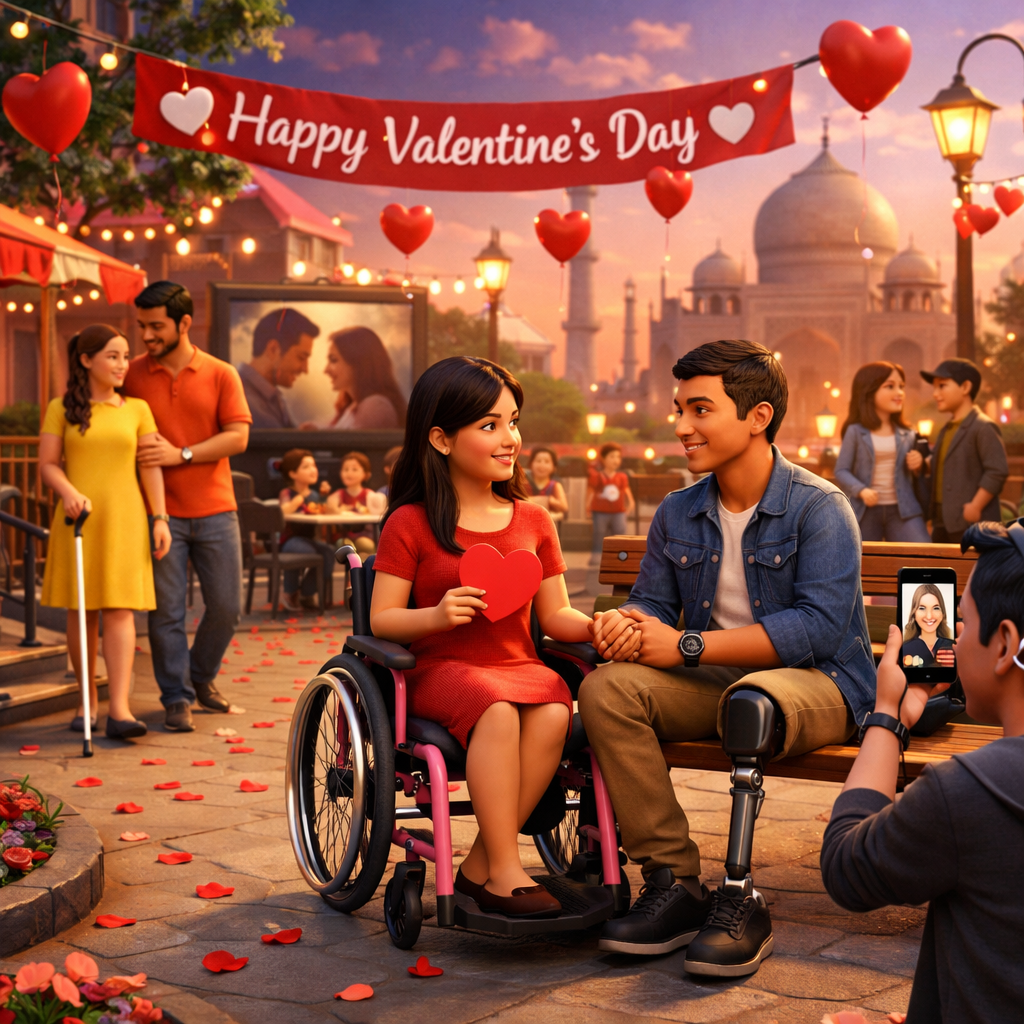
Valentine’s Day often overlooks the challenges faced by people with disabilities in India. This blog post explores the barriers they face, from physical accessibility to societal perceptions, and suggests how we can make this day more inclusive, hopeful, and meaningful for everyone.
People all over the world celebrate love, affection, and romantic gestures on Valentine’s Day. However, in Indian society, the meaning of this day can be complex for people with disabilities. Love and companionship are things that everyone wants, but there are social and physical barriers that keep many people with disabilities from having a meaningful day.
The accessibility of Love and Romance In a country like India, where cultural norms often get in the way of love and relationships, people with disabilities may already feel like they don’t belong when it comes to dating, relationships, and making friends. People with disabilities face social barriers that make Valentine’s Day, a day that is usually seen as a time to show romantic love, more difficult.
To begin with, society doesn’t make it easy for people with disabilities to understand love and relationships. When it comes to love and affection, many people expect things like holding hands, going on dates, and giving gifts. However, people with physical disabilities may not be able to do these things without help. For instance, how many places are there that are easy for people with mobility problems to get to? Is the public space good for people in wheelchairs or other assistive devices to go for romantic walks or casual meetings? How often do people talk about relationships that include people with disabilities?
There is also the emotional and mental aspect, in addition to physical accessibility. For a lot of people, Valentine’s Day is a reminder of what they do or don’t have. In Indian society, where family and social expectations often decide how valuable a person is, people with disabilities are sometimes left out of these private talks about love. Society often doesn’t recognize that people with disabilities have the right to love and be loved, so they may feel like they aren’t worthy of romantic attention.
Accessibility Beyond Infrastructure
When we talk about accessibility, we usually mean things like ramps, elevators, and public transportation that are easy to get to. These things are important, but love and Valentine’s Day are about more than just the physical. It also includes how easy it is for people with disabilities to connect with others emotionally and mentally in romantic and other relationships.
What about getting into social spaces where love can grow? Do dating sites exist that are made just for people with disabilities, or do these people have to use regular dating sites that may not meet their specific needs? How do people with disabilities get the chance to show their love without worrying about being judged or shunned?
Online dating is still new in India, so platforms need to be open to everyone by providing personalized solutions like better accessibility, understanding of different needs, and ways for people to meet without discrimination. These platforms should also teach people how to make relationships work for everyone, no matter what their abilities are.
How can we change the story to make Valentine’s Day more hopeful?
- Honoring Diversity in Public Spaces:
To make Valentine’s Day easier for people with disabilities, we need to focus on public spaces that are open to everyone. Anyone, no matter how physically able they are, can celebrate love freely in restaurants, movie theaters, parks, and event spaces that are easy to get to. Picture a Valentine’s Day when couples, disabled or not, could all hang out in the same places without any problems. - Media and Representation That Include Everyone
Indian movies, TV shows, and social media often show love in a very specific way that doesn’t include people with disabilities. We can start to change how society sees romance for everyone by making more diverse representations of love more common. There is a strong need for more stories that show relationships where one or both partners have disabilities. These stories would show that love and intimacy are universal feelings. - Emotional Support and Learning
We also need to teach society that people with disabilities have emotional and romantic needs just like everyone else. Instead of shutting down conversations or ignoring the topic of love and marriage, family and friends should create an environment that encourages healthy relationships. Campaigns in schools should teach people to respect everyone’s right to love, no matter what their abilities are. - Making Online Spaces More Accessible
It’s important to make digital spaces more welcoming because they are becoming the main place for people to meet and connect. Dating apps and websites should have features that make them easier to use for people with disabilities, like screen readers for people who are blind, simple interfaces, and better ways for people who are deaf to talk to each other. These small changes can make a big difference in making love and dating more open to everyone. - Making safe places for people with disabilities to meet
More importantly, people with disabilities need safe places, both in person and online, where they can meet others who understand and value their unique needs. These places should do more than just make it easy for people with disabilities to get around; they should also encourage open conversation and understanding about relationships. This will help get rid of the stigma that people with disabilities often face when dating or falling in love.
Conclusion
Valentine’s Day is a day to celebrate love, but it’s also important to remember that everyone should be able to experience love in all its forms. People with disabilities may find it hard to understand what the day means because of social, emotional, and physical barriers. But if we keep raising awareness, making things more accessible in both the real world and online, and making sure that everyone can enjoy Valentine’s Day and love itself, we can make it a hopeful, possible, and welcoming day for everyone.
On this day of love, let’s work to make it truly accessible—not just in the places we walk, but also in the way we think, feel, and love.


How beautiful. Falling in love with all your articles and blogs.
Thank you!