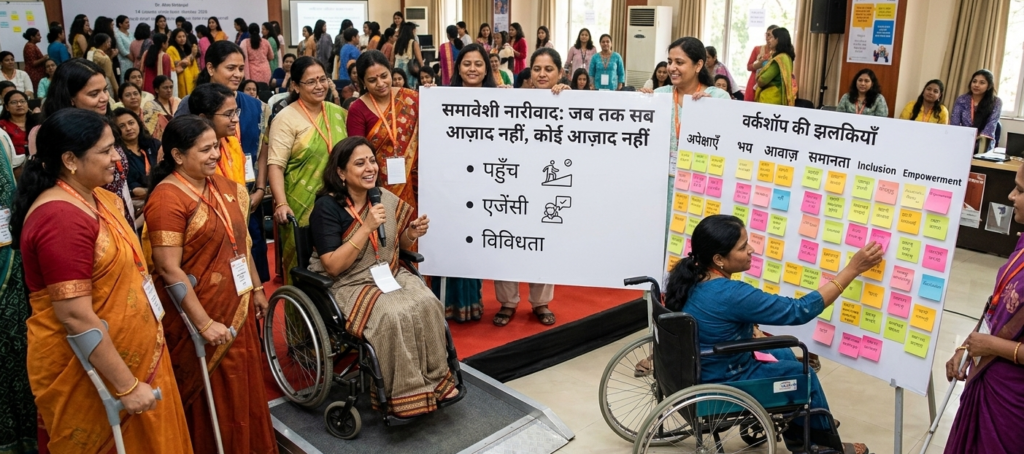
Image of a wheelchair user in workshop with participants around her

समावेशी नारीवाद: जब तक सब आज़ाद नहीं, कोई आज़ाद नहीं

क्या हमारा नारीवाद वास्तव में समावेशी है? फ़्लम्बारी हिंदी 2026 में आयोजित 'नारीवाद और विकलांगता न्याय' कार्यशाला के माध्यम से हमने समझा कि समानता का अर्थ केवल एक जैसा व्यवहार नहीं, बल्कि हर महिला की शारीरिक विशिष्टता और सुगम्यता (Accessibility) को ध्यान में रखना है। डॉ. आभा खेतरपाल द्वारा संचालित इस सत्र में ४५ ज़मीनी कार्यकर्ताओं ने अपनी अपेक्षाओं और भयों को साझा किया, यह स्पष्ट करते हुए कि नारीवाद तब तक अधूरा है जब तक इसमें विविधता और एजेंसी (स्वयं निर्णय लेने की शक्ति) को प्रमुख स्थान नहीं मिलता। आइए, बाधाओं को पहचानें और एक ऐसी दुनिया की नींव रखें जहाँ हर आवाज़ सुनी जाए और हर स्थान सुगम हो।
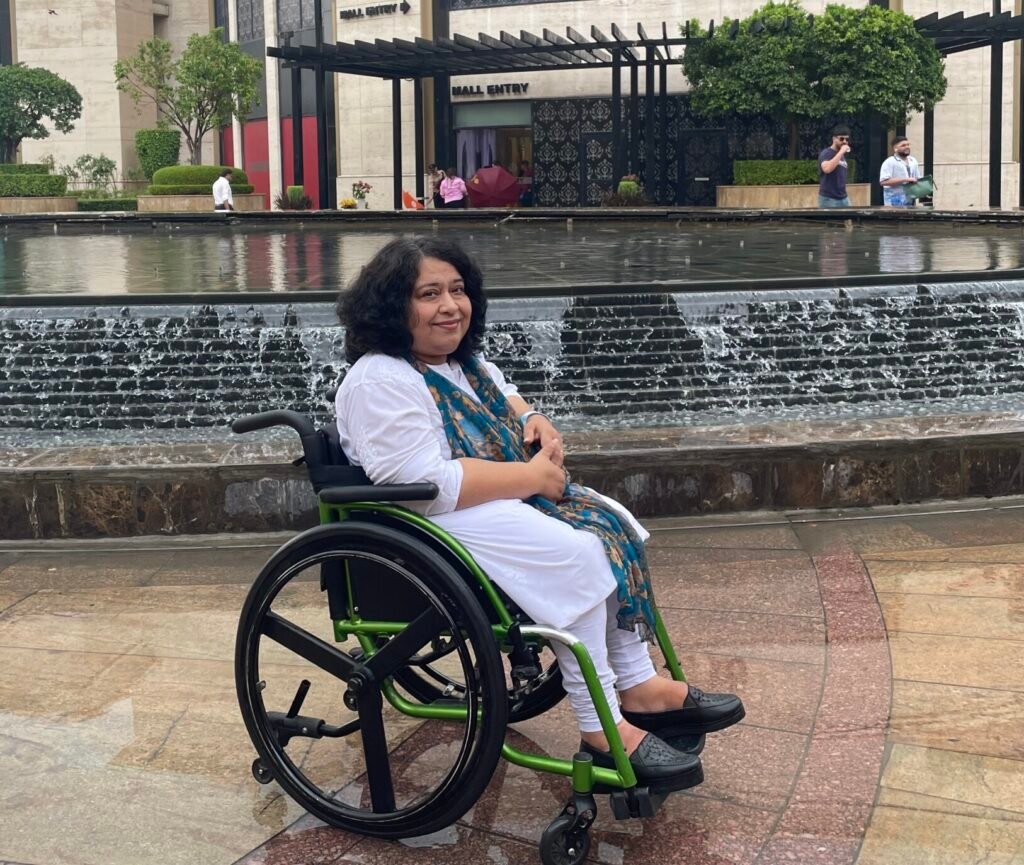
Abha out somewhere sitting in her wheelchair wearing white attire and smiling

A Journey Through Advocacy, Aging, and Post-Polio Syndrome; Understanding Spoon Theory Through Lived Experience

For over five decades, I’ve defied the odds as a polio survivor and disability rights advocate, achieving national and international recognition. But as I now face the realities of aging and Post-Polio Syndrome (PPS), I’ve come to understand how limited energy—both physical and mental—impacts my daily life. The Spoon Theory, coined by Christine Miserandino, is a metaphor that helps explain how those living with disabilities manage their energy. This simple yet powerful framework has provided me with a lens to articulate the quiet struggles of living with a disability, especially as the years take their toll. My journey is one of constant adaptation, learning to manage my energy in a way that continues to support my advocacy, while also taking care of my health.